
◷ 2 minutes reading time (386 words)
What the Closed Drawer Leaves Unsaid
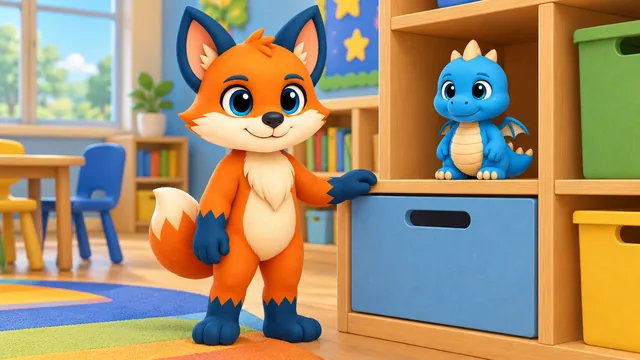
The drawer sequence begins with an ordinary classroom routine that Quzii does not join. Other characters check their drawers, while he walks past his own and takes his seat.
The difference between that shared routine and his action gives The Drawer I Didn't Open its starting point. It leaves the reader with an event to follow rather than a complete explanation.
Begin with the action described
In the first entry, Quzii passes the drawer without looking at it. Bronto is positioned on the shelf, facing towards the drawer.
On a reread, look at how the classroom routine is established before Quzii arrives. Knowing what the other characters usually do makes his route through the room noticeable.
You can describe that difference without deciding what every real child who avoids an activity must be thinking.
Follow the paper as well as the drawer
In The Handle I Touched, Then Let Go, Quzii approaches the handle with a folded drawing but turns away. The next entry follows the paper into his backpack's side pocket.
The sequence gives the object a route through the day. Returning to that route can be more specific than asking for an overall lesson about the drawer.
An optional question is, “Where does the paper go in this entry?” Keep the paragraph available so the reader can point, check or ask to hear it again.
Notice what the final entry adds
In When I Turned Bronto Toward the Page, Quzii takes out the folded paper in his bedroom, places it beside Bronto and turns Bronto towards it. He does not give a spoken account of the drawer.
That final arrangement can be discussed as part of the written sequence. The drawing's contents do not need to be invented to make the placement worth noticing.
Keep interpretations in the conversation
A reader may connect the drawer with privacy, routine or another idea. Ask which passage led them there and leave room for another reading.
The discussion can stay with the fictional paper and drawer. It does not need a matching personal disclosure from the reader or an adult conclusion about the reason behind a real person's silence.
Read next
Related Posts
 Reading The Sorry That Didn't Feel Right: What Happens After the Apology?Bronto’s Reflections
 When a Toy Sits Between Two CharactersBronto’s Reflections
 The Presence That Doesn't Push: Reading the Adult's RoleBronto’s Reflections
 The Game We Made TogetherBronto’s Reflections
 The ‘Sorry’ That Didn’t Feel RightBronto’s Reflections
 The Toy Sat in the MiddleBronto’s Reflections