
◷ 2 minutes reading time (360 words)
Why Text and Artwork Need Separate Checks
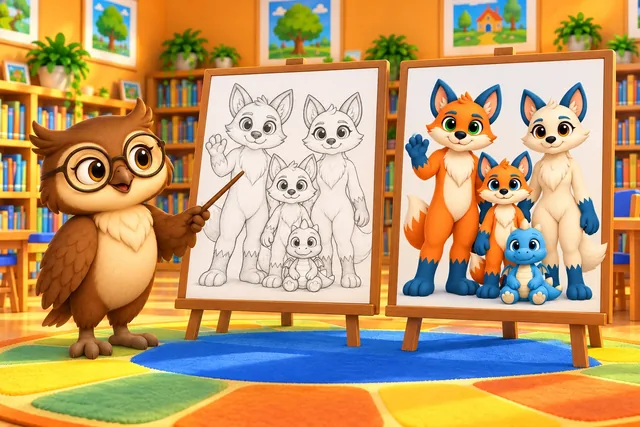
A picture can agree with the mood of a scene while disagreeing with its events. A page might describe a closed door while the illustration shows it open, or place an object in one character's hand while the words put it somewhere else.
Checking words and pictures separately makes those differences easier to find.
Ask the words what they establish
Begin with the exact passage: who is present, where they are, what happens and which objects matter. Notice what is left unstated too.
If the writing leaves an object unseen, showing its contents in a picture may reveal something the story intends to withhold. If a character is only mentioned, placing them in the scene can change who is present.
These are questions about the relationship between the sentence and the image, not just about whether the illustration looks attractive.
Ask the picture what it shows
Look at actions, positions and expressions. Check which hand holds an object, which direction a path leads and whether doors, steps or furniture can work as drawn.
Then compare the character with the approved reference. A recognisable colour is not enough if the proportions or expression have changed. A visual detail added for decoration can become a story detail once it appears on the page.
Check the page as a reading surface
Words need room, contrast and a clear order. A beautiful scene may still put important text over a busy part of the picture or leave a face hidden in a fold.
The format matters. A scene used across two pages has a centre fold to consider; a small thumbnail has a different viewing size. Each intended use needs to be inspected in that form.
Keep the decisions specific
A useful note identifies the exact difference: “The text keeps the drawer closed, but this image shows its contents.” That gives the writer and artist a concrete issue to resolve.
An approval of one cover or scene does not automatically settle every interior page or format. Follow the exact title and edition when reading production news, and treat a preview as a preview until its release status is confirmed.
Read next
Related Posts
 A Read-Aloud Checklist for Story WritersStories Still Unfolding
 What a Companion Activity Needs to ExplainStories Still Unfolding
 The Pack: A Colouring-Book Concept in DevelopmentStories Still Unfolding
 Family Life: A Colouring-Book Concept in DevelopmentStories Still Unfolding
 Quzii and Bronto: A Colouring-Book Concept in DevelopmentStories Still Unfolding