
◷ 2 minutes reading time (356 words)
What a Companion Activity Needs to Explain
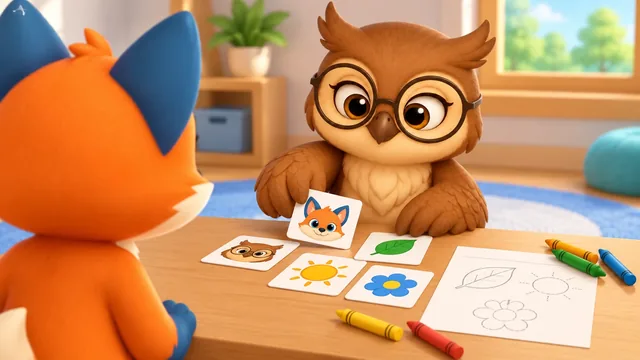
An activity can look attractive and still be difficult to use. A page may say “create your own story space” without explaining what to put out, who takes the first turn or how anyone knows they have finished.
When an activity accompanies a story, the instructions need to do practical work. Here is a way to check them using an example made for this activity.
Start with the materials and the invitation
Example: make a small place for an object from a familiar story. Put out a sheet of paper, a few blocks and one ordinary object, such as a clean, empty cup. Use the cup as a play prop.
The invitation could be, “Would you like to make a place where this cup can stand?” That is a task someone can picture. It does not require a long explanation of creativity, confidence or learning goals before they begin.
Offer drawing instead of building, or the option to watch. Check that the materials are suitable for the people using them and keep small pieces away from children who might put them in their mouths.
Separate the adult note from the participant's steps
The adult note can explain preparation: choose a stable surface, leave enough room for separate ideas and do not require a verbal account of the finished work.
The participant's steps can remain short:
- Choose where the object will stand.
- Add a path, boundary or supporting piece if you want one.
- Decide whether to keep building, change something or finish.
If a step needs several further instructions, it may need to be split. If an adult must keep guessing what to say next, the guidance needs more work.
Give the activity a real stopping point
“When you have expressed your feelings” is not a clear finish. “When the object has a place to stand, you can stop” is something a participant can decide.
A stopping point is not a requirement to complete the task. Someone may finish earlier, remove their pieces or decide not to begin. Explain how to put the materials away without requiring a photograph, performance or explanation first.
Read next
Related Posts
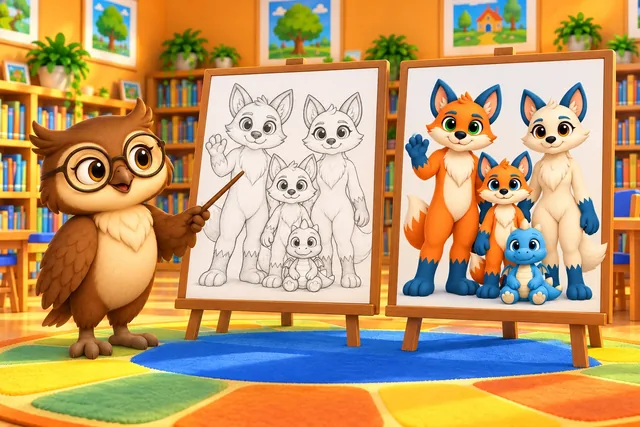 Why Text and Artwork Need Separate ChecksStories Still Unfolding
 A Read-Aloud Checklist for Story WritersStories Still Unfolding
 The Pack: A Colouring-Book Concept in DevelopmentStories Still Unfolding
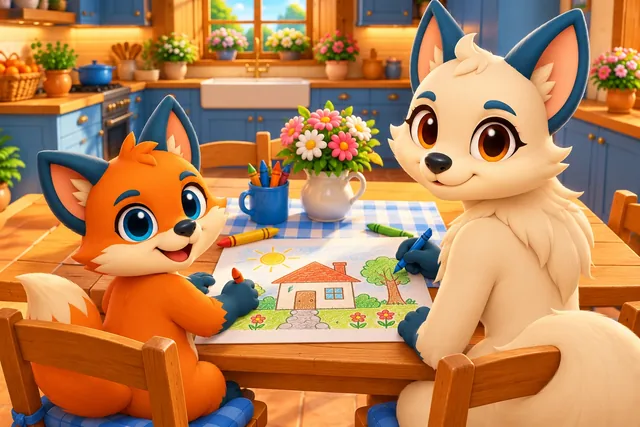 Family Life: A Colouring-Book Concept in DevelopmentStories Still Unfolding
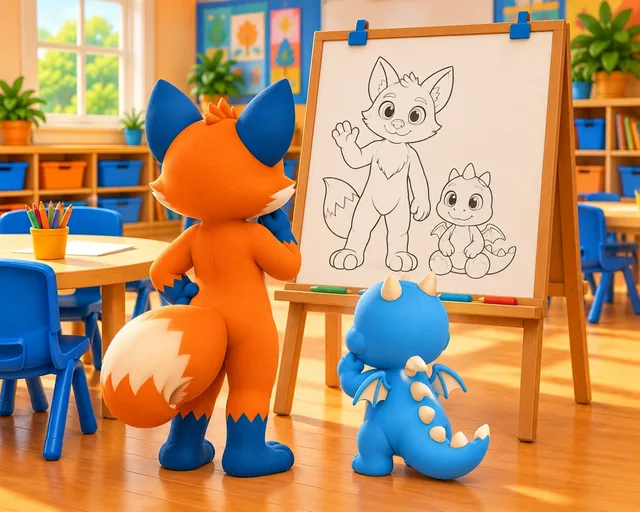 Quzii and Bronto: A Colouring-Book Concept in DevelopmentStories Still Unfolding