◷ 2 minutes reading time (325 words)
A Story Prompt to Try Together: What Happened Next?
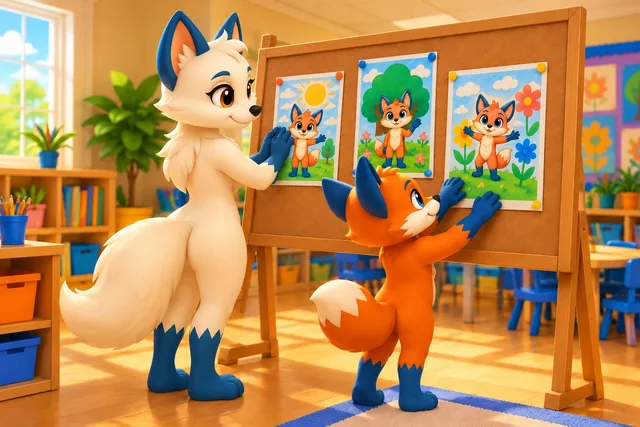
“What happened next?” gives you a simple way to return to an action in a familiar story.
Keep the book or story open so you can find the next action together.
Choose a small moment
Find a paragraph where someone moves, places an object or speaks. Read it together, then ask, “Shall we look at what happens next?”
The next action may be ordinary: a character sits down, a door closes or an object stays where it was. Do not discard the small answer because you were hoping for a larger theme.
If the reader wants to point, let the gesture identify the passage. You can read it aloud if asked. If they do not want to join the search, continue reading or leave the question there.
Keep prediction separate from rereading
A prediction belongs before the next action is known. A rereading prompt asks what the existing text says. Both can have a place, but they are different tasks.
If someone imagines a different ending, try, “That would be your ending. Shall we see what happens here?”
Likewise, a character's action does not automatically establish everything about their feelings. Stay with what the writing gives before discussing an interpretation.
Leave time to find the line
Avoid repeating the question rapidly or supplying several hints at once. Turn back to the paragraph if the reader has lost their place. You can say, “It's here if you want to look.”
There is no requirement to remember the sequence without the page. The purpose of this invitation is to revisit the story, not to produce a score.
For an adult preparing a discussion, note the exact paragraph you want to return to and why it interests you. One clear point of return is more manageable than a list of questions for every scene. If the conversation does not happen, the reading can still end at an ordinary, agreed stopping place.
Read next
Related Posts
 What to Ask After Reading With a Child: Notice, Point or PassReflection Prompts
 Three Questions to Try When Rereading a StoryReflection Prompts
 Story Discussion Questions That Start With the CharacterReflection Prompts
 Something We Both WantedReflection Prompts
 The Feeling I Drew but Didn’t ShowReflection Prompts