
◷ 2 minutes reading time (313 words)
The Crayon That Waited: A Short Reread
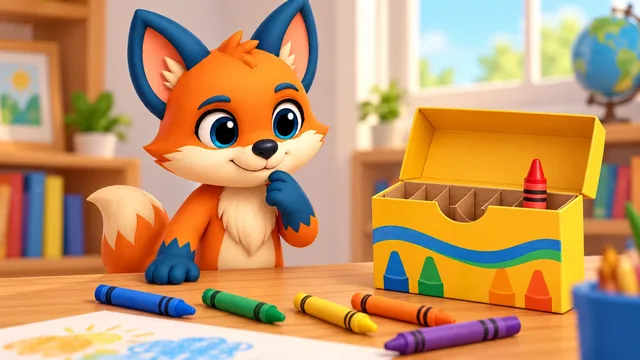
In The Crayon That Waited, one crayon remains in the box while other crayons make their marks. The piece stays with that waiting rather than adding a later scene in which the crayon finally produces a picture.
Its short length makes it possible to reread the whole piece without requiring a long session around it.
Notice what the other crayons do
The other crayons make flowers, storms and stars. Those images give a contrast with the crayon that stays in the corner of the box.
On a second reading, find the different marks described. The reader can name one, point to the words or ask to hear the list again.
You do not need to ask which crayon represents the reader or require them to explain a personal feeling before the passage can be discussed.
Keep the ending that is written
The waiting crayon is still available at the end of the piece. The original does not tell us what picture it later makes.
A reader may enjoy imagining the picture the crayon could make. You can share ideas or leave it waiting in the box.
Offer paper only if it is wanted
If the reader would like to draw after the piece, put out suitable materials and a blank page. Say that they can make one mark, several marks or none.
An adult can draw on a separate sheet, but avoid making the activity a demonstration of what the reader ought to produce. The page does not need to be filled before it can be put away.
Ask before displaying, photographing or keeping a personal response. A colour choice or an unfinished drawing does not need an adult interpretation.
Return to the short piece
Read the short piece below, then choose a line to hear again, make something or leave the reading there.
Read next
Related Posts
 Reading The Feather Between Them: A Story With an Open EndingMini Adventures
 The Second Crayon: Two Colours, Two Different DrawingsMini Adventures
 The Feather Between ThemMini Adventures
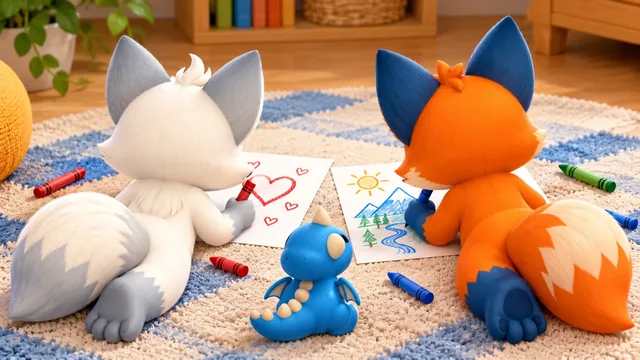 The Second CrayonMini Adventures
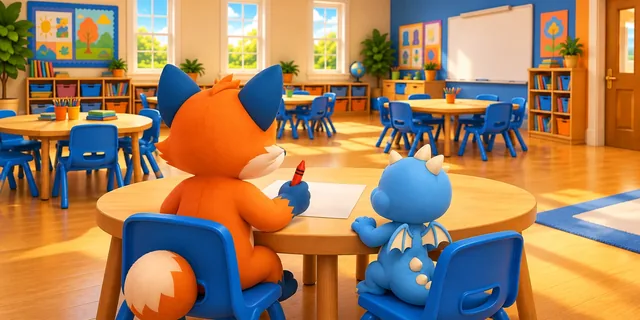 The Crayon That WaitedMini Adventures